The neighbourhood
San Miguel, a flamenco barrio
San Miguel is the Jerez barrio around La Guarida del Ángel: its church, its plazas and why it is counted among the city's two great flamenco districts.
Book flamenco in San Miguel ↗Quick answer
San Miguel is a barrio in the centre of Jerez de la Frontera, named for its church and counted with Santiago as one of the city's two Gitano barrios. La Guarida del Ángel stands in it, near the Plaza de las Angustias. Spanish Wikipedia names Lola Flores, Antonio Chacón, Manuel Torre and La Paquera among its artists.
Where it is
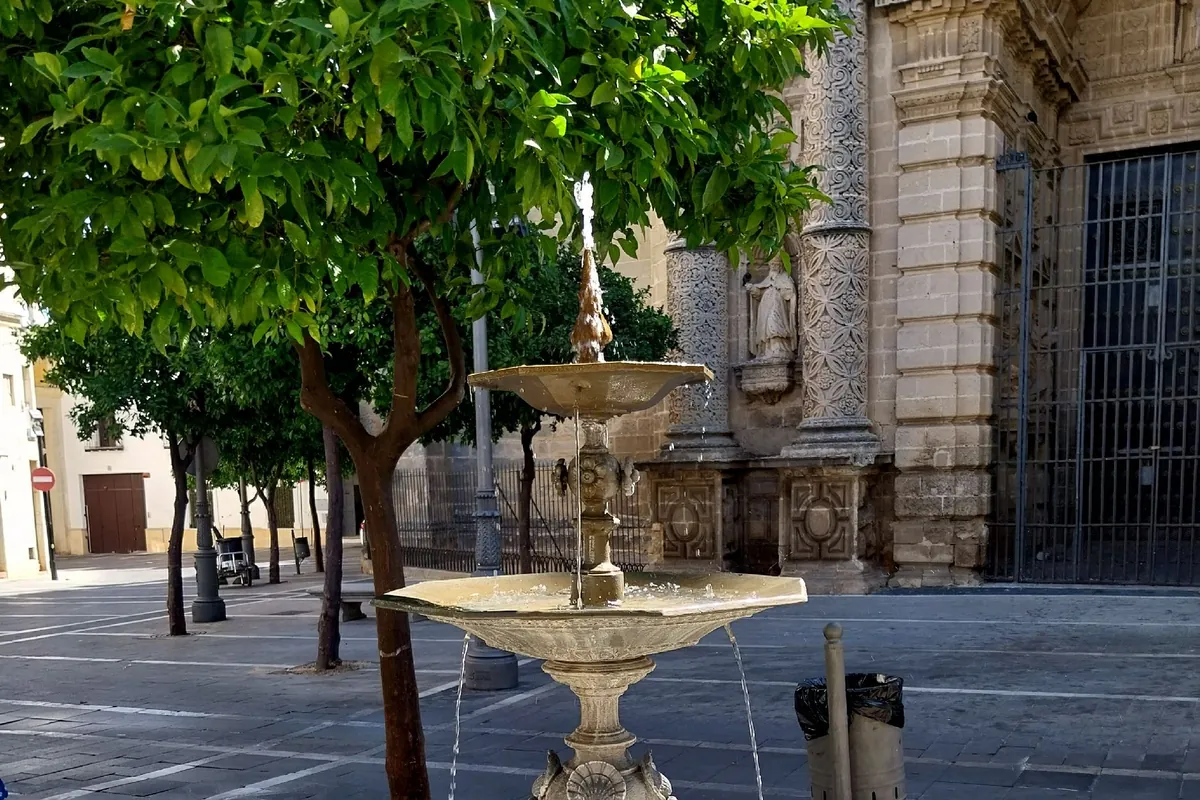
Spanish Wikipedia places San Miguel in the Distrito Centro of Jerez de la Frontera and says it began as an arrabal, a suburb outside the walls, on the south-east side of the old wall in the fourteenth century. DeFlamenco's account says it lies on the side of the city facing the Guadalete river. The booking page for the tablao puts La Guarida del Ángel in the heart of San Miguel, close to the Chapel of Angustias.
The church that named it
Spanish Wikipedia calls the church of San Miguel the soul and head of the barrio. It says the church was built on an earlier hermitage, and that Alfonso XI ordered the work in 1340 after the battle of Salado. The church gave its name to the barrio, so the district's identity starts with a building, not with music, and Spanish Wikipedia describes the barrio as central and populous.
The squares
The Spanish Wikipedia article lists the Plaza de las Angustias, the Cruz Vieja and the Capilla de la Yedra among the key points of the barrio, and calls the area a popular, simple triangle. It says the Plazuela has a Gitano spirit. The Barceló travel guide places La Guarida del Ángel next to the Plaza de las Angustias. For a visitor it means the tablao stands close to the squares through which the barrio's history is told.
Why it counts as a flamenco barrio
Jerez's tourist office speaks of the mythical barrios of San Miguel and Santiago, and the booking page for the show calls San Miguel one of the two Gitano neighbourhoods of the city. The Barceló guide says spontaneous singing and dancing happen particularly in San Miguel, Santiago and San Mateo. Spanish Wikipedia adds that San Miguel shares a long flamenco tradition with Santiago. Taken together, the sources agree that this is a district where flamenco is part of ordinary life.
The artists it is linked with
Spanish Wikipedia names Lola Flores, Antonio Chacón, Manuel Torre, La Paquera, María José Santiago and Paco Cepero among San Miguel's notable artists. Pierre Lefranc's DeFlamenco article adds Manuel Molina, Loco Mateo, Diego el Marrurro, Joaquín la Serna and Merced la Serneta. You do not need to know any of these names to enjoy an evening in the barrio, but they explain why the area's reputation is attached to singing in particular.
The sound of San Miguel
Lefranc describes the cante of San Miguel as leaning towards the forceful expression of naked grief, often with a note of revolt or haughtiness, and calls the barrio a nest of individualists. In bulerías, he says, it seems to lean towards the more austere style por soleá, played to be listened to, whereas Santiago deploys dynasties and salvoes of fast rhythm. Those are one writer's observations from 2007, not rules, but they give a listener something to compare.
Read next: Bulerías: Jerez's party rhythm
Santiago next door
DeFlamenco's article describes Santiago as a suburb, an arrabal, that grew on the north side of the walled city with direct access to fertile farmland. It says the Gitano work teams there, the gañanías, sang in the evenings and in bad weather without guitars, and that Santiago's families nurture certain forms in which the cante remains a family heirloom. Among its artists it names Terremoto, José Mercé and Fernando de la Morena. San Miguel, on the south side, is the other half of the pair, and the two are usually discussed together.
Planning a visit
Treat San Miguel as a place to arrive early in and linger in afterwards. The tablao show lasts an hour, and the venue's home page lists a tabanco, El Rincón de Lola, with Jerez wines, tapas and home cooking. The barrio is part of the historic centre, so you can combine the evening with the squares above. The time on your reservation is the only one worth planning around, and it is worth checking again the day before you travel.
Frequently asked questions
Where is San Miguel in Jerez?
In the Distrito Centro of Jerez de la Frontera, on the side of the city facing the Guadalete river.
Is La Guarida del Ángel in San Miguel?
Yes. The booking page places it in the heart of San Miguel, near the Chapel of Angustias.
Which artists come from San Miguel?
Spanish Wikipedia names Lola Flores, Antonio Chacón, Manuel Torre, La Paquera, María José Santiago and Paco Cepero.
Is San Miguel the same as Santiago?
No. They are Jerez's two best-known flamenco barrios, on different sides of the old city.
Sources